
Space Opera Becomes Soap Opera
My take on the Star Trek franchise.

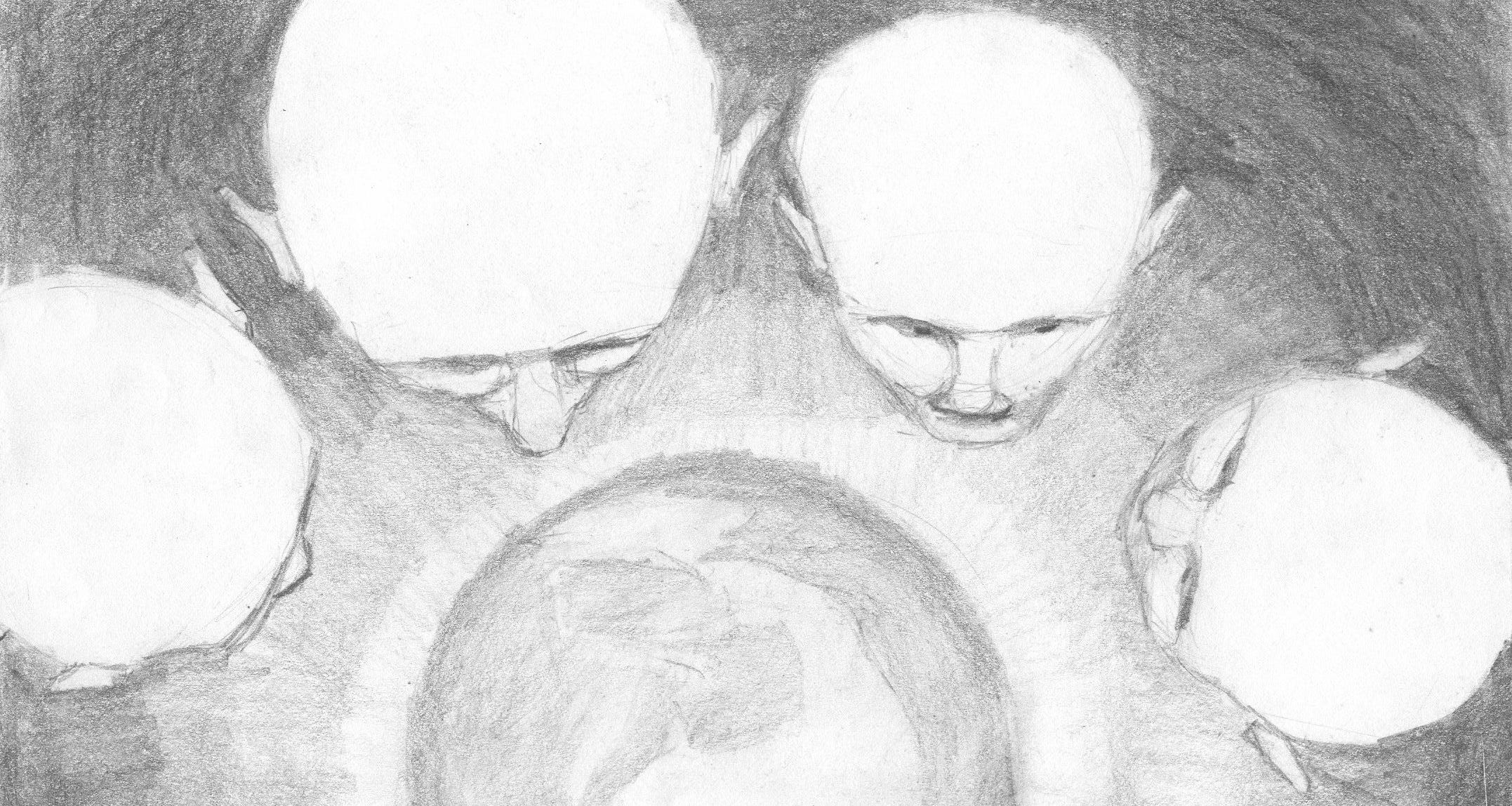
My girlfriend is a science fiction fan. Azimov is her favorite author. She decided she wanted to watch all the Star Trek episodes – with me. I (reluctantly?) agreed. We are now in the middle of the Discovery series.
Space Opera
Wikipedia: “Space opera is a subgenre of science fiction and science fantasy that emphasizes epic outer space adventures set in a universe in which faster-than-light travel has become common. The plots often play out against a backdrop of space warfare, alien civilizations and galactic empires. The sub-genre is sometimes thought of as a futuristic homage to earlier adventure sagas, such as those found in mythology and chivalric romance.”
“An early serial film which was based on space opera comic strips was Flash Gordon (1936)”
“The term “space opera” was coined in 1941 by fan writer and author Wilson Tucker as a pejorative term in an article in Le Zombie (a science fiction fanzine).”
Hubbard used to describe his early science fiction writing using this term.
However, he described his long novel Battlefield Earth (1980) as “pure science fiction.” Pure science fiction does not include “fantasy” elements such as magic, telepathy, or (probably) time travel.
Soap Opera
This is an earlier term applied to radio (and later TV) shows sponsored by dish or laundry soap companies and aimed at a mid-day female audience.
Wikipedia: “A soap opera (also called a daytime drama or soap) is a genre of a long-running radio or television serial, frequently characterized by melodrama, ensemble casts, and sentimentality.”
There is a definite emphasis here on the serial nature of the storytelling. And on melodrama and sentimentality. Ensemble casts are common in both space opera and soap opera.
Star Trek
Gene Roddenberry, the originator of Star Trek, is quoted as describing it as “Wagon Train to the stars.” This embodies both the zeitgeist of the characters (cowboy) and the structure of the series; independent stories (or you could say short stories) set in the larger context of a “5-year mission.”
The Original Series ran for 3 years, from 1966 to 1969, and was imagined to occur in our 23rd century (the 2200s). It had 80 episodes, which is a lot for only 3 seasons. The other series, mostly live-action TV series, are listed here:
Star Trek: The Next Generation – Created by Gene Roddenberry twenty-one years after the original, and set in the 24th century. It features a new Enterprise…It originally aired from September 28, 1987, to May 23, 1994.
Star Trek: Deep Space Nine – set in the Next Generation era, this spin-off series is set on the titular space station, situated on the edge of Federation territory.
Star Trek: Voyager – another spin-off series set in the Next Generation era, set aboard the starship Voyager as its crew attempt to return home after getting transported and lost.
Star Trek: Enterprise – a prequel series set on an early iteration of the Enterprise around the year 2150. It was created by Berman and Braga. It originally aired from September 26, 2001 to May 13, 2005. Its format was changed to a serial in the 3rd season, but was canceled after the 4th season.
Star Trek: Discovery – a series initially taking place shortly before the era of Star Trek: The Original Series and set aboard the Discovery. It was created by Bryan Fuller and Alex Kurtzman under the corporate leadership of CBS (now Paramount Global). It was released from 2017 to 2024.
The first episode takes place in 2256. At the end of the second season, the ship goes into the future 950 years and the rest of the series occurs in the 32nd century. These were shorter episodes and shorter seasons. And they were not released continuously. Thus, there were only 5 seasons released over a period of 7 years. There were 65 episodes.
Star Trek: Strange New Worlds – Created by Akiva Goldsman, Alex Kurtzman, and Jenny Lumet for the streaming service Paramount+. It debuted in 2022, as a spin-off from the series Star Trek: Discovery. It follows Captain Christopher Pike and the crew of the starship Enterprise in the 23rd century during the decade before the The Original Series.
Star Trek: Starfleet Academy – Created by Gaia Violo for Paramount+. It is part of executive producer Alex Kurtzman’s Star Trek Universe. It is set in the 32nd century. It follows the first new class of Starfleet cadets in over a century as they come of age and train to be officers.
I have watched the Original Series, then Academy, then Strange New Worlds, then Enterprise and now Discovery.
Discovery and Strange New Worlds (which I remember less well at this point) and Starfleet Academy definitely have a different tone and zeitgeist than the Original Series, or even the Enterprise series as re-invented by Berman and Braga.
Though the transition can be seen as a product of cultural change, it remains to be determined exactly what is driving that change. Fans who don’t like Discovery, etc., blame Kurtzman for the “descent” into issues of Critical Theory and inner conflict, abandoning the “cowboy” happy-go-lucky approach of the original series, which bled into Enterprise to a certain extent.
The new focus on conflicted characters, marginalized by personal life events or disabilities, is unmistakable and, to many, unforgivable. That’s not what Space Opera is for; it’s what Soap Opera is for.
I tend to agree. The emphasis on conflict, introduced perhaps by Star Wars (1977), over exploration and the odd situations that result from it, is at best bothersome. And in Discovery, the long and poignant conversations in the middle of pitched battles seem way overdone and, frankly, unrealistic. No one works out deep relationship issues when bombs are exploding all around them. Do they?
Kurtzman
Alex is quoted as saying this recently: “Gene Rodenberry had this lightning bolt of an idea and I think he understood something fundamental about the nature of science fiction and genre storytelling, which is that science fiction is not really about the future, it’s about now. It’s the prism, the looking glass, the magnifying glass through which we examine ourselves, the state of humanity, who we are, what we’re capable of, and where we’re going.”
The article this is taken from published on 9 March of 2026 by John Trent, goes on to quote other greats in the field of science fiction who begged to differ. Azimov, Clarke, Bradbury. They all had different takes. But a common thread seems to be that science fiction deals with how people react to or handle technological changes, not their inner monsters.
The author of this article wants Kurtzman gone, as do many others.
My Biggest Beefs
There are a LOT of writers who use fiction as a commentary on current events. Even Orwell did that with 1984, as he was observing the rise of Communism in the wake of the fall of Nazism and Fascism.
Star Wars did that, too. But remember this important point: Star Wars was set in the PAST. It gave us the hope that we could put that kind of behavior behind us. In the Star Trek Universe, the idea of Empire lives on, always threatening, in fact, to overwhelm us.
But the origin of Space Opera was through “adventure stories,” a kind of escapist literature bred of the threats of poverty and war simmering in the 1920s and 1930s. It gave the reader heroes that he could hope for, or even try to emulate. One might even say that these stories attempted to define for the reader the prerequisites for courage and heroism. And I don’t think it’s wrong to have heroes in science fiction.
But much more than that: Star Trek envisioned a future in which Humanity had become MORE ADVANCED. In that sense, there was a utopian aspect to it. To collapse the characters into their own emotional problems ruins this vision of the future. In the future, we have worked this stuff out; the past need no longer leer out at us to shake our resolve or hold us back.
To me, the ideal Star Trek, if not simply giving us interesting tales of adventure, would map out for us a vision of how this transformation comes about. How the wickedness of old empires turns into the beneficence of a new era of human self-awareness and freedom. To do this the writer must have some idea of how we got the way we are (or were) and how we could manage to rise above it. Those ideas are out there; apparently few if any modern writers have actually studied any of them. We have been infected with a kind of defeatism. And while this might seem quite understandable, it must be rejected if we are in fact going to survive as a species – and beyond our species.
There is one whole contingent that asserts that we must return to past greatness to save ourselves. For better or worse, these folks are not very good writers.
Isaac Asimov had the whole concept of psychohistory, a way of predicting the future using probabilities based on models of human behavior. Though I think this is a bunch of bull, he successfully wrote many science fiction stories based on this idea.
Edward Bellamy (to go a little over the top) believed in Christian Socialism. I don’t believe he ever really succeeded in imagining how we would get there. So his book survives as a brand of utopia, not really science fiction.
Hubbard also had a vision, but did not use it (at least not much) in his fiction. I believe his is the most potent. It involves a new technology, already invented, called Spiritual Counseling (or “Auditing”). The big question on Earth is whether this technology can be taught and applied broadly enough to overcome its enemies’ attempts to destroy it. There are some similarities here with Star Wars.
There are several other subjects that a hundred years from now, should be “solved,” or at least fully understood. Some of these have been touched on in Star Trek episodes. By ignoring these, or assuming humanity makes no real progress with them, modern Star Trek writers condemn us to endless pain and suffering, in spite of Warp Drive, Transporters, Bio Beds and all the rest. And so, while they see through the limitations of these technologies, they offer no other path for advancement that could enable us to actually win out after all. You might even say they are on the side of Death To All Humans.
1) Reincarnation. In 100 years this issue should be crystal clear. It happens and it has to be taken into account. That spills over into the following subjects:
2) Human psychology. We HAVE to take past lives into account. There is no other way, and this should be a fruitful – if not endless – resource for any fiction writer. Skip all the genetic stuff; it’s useless.
3) Psychic powers. In 100 years we should have acknowledged their reality and learned ways to control and enhance them. This includes telepathy, exteriorization, and various “alternate” ways of knowing and acting.
4) Spirit. The above then open the wider subject of the spiritual world in general, how far does it extend, what does it include, how can spiritual beings be controlled and/or set free. This is also a subject that gets touched on by the modern writers, but with no certainty or breadth of understanding. We have no reason to believe that future humans would not be able to understand this world more or less completely.
5) ETs and their past relationship to Earth humans. Evolution and the actual origins of biology. The dinosaur extinction and other catastrophes. Atlantis. In 100 years, all these topics should be fully understood and thus proper fodder for today’s science fiction writers.
6) ET civilizations and their true beginnings. The true origins of Space Opera. Faster-than-light travel. It is quite possible that in one or two hundred years from now, we will not completely understand all these topics. But they are fully fodder for Science Fiction, whether it be set in the past or the future. These are the actual dramas of our time, and they are playing out right in front of us, though most of us are only dimly aware of them. Unless something really terrible happens, we will be more aware – if not fully aware – of them in the future. They are important and I would expect to see them front and center in modern science fiction.
7) Time travel. I say forget it. It is a dead end subject with ramifications so perverse that they are not even worth exploring. Present time has all the data we need to keep life very interesting, if not too interesting.
8) Multiple universes. Same problem. Skip it. It’s delusional thinking.
I would appreciate comments to this post.